Peptides, Longevity
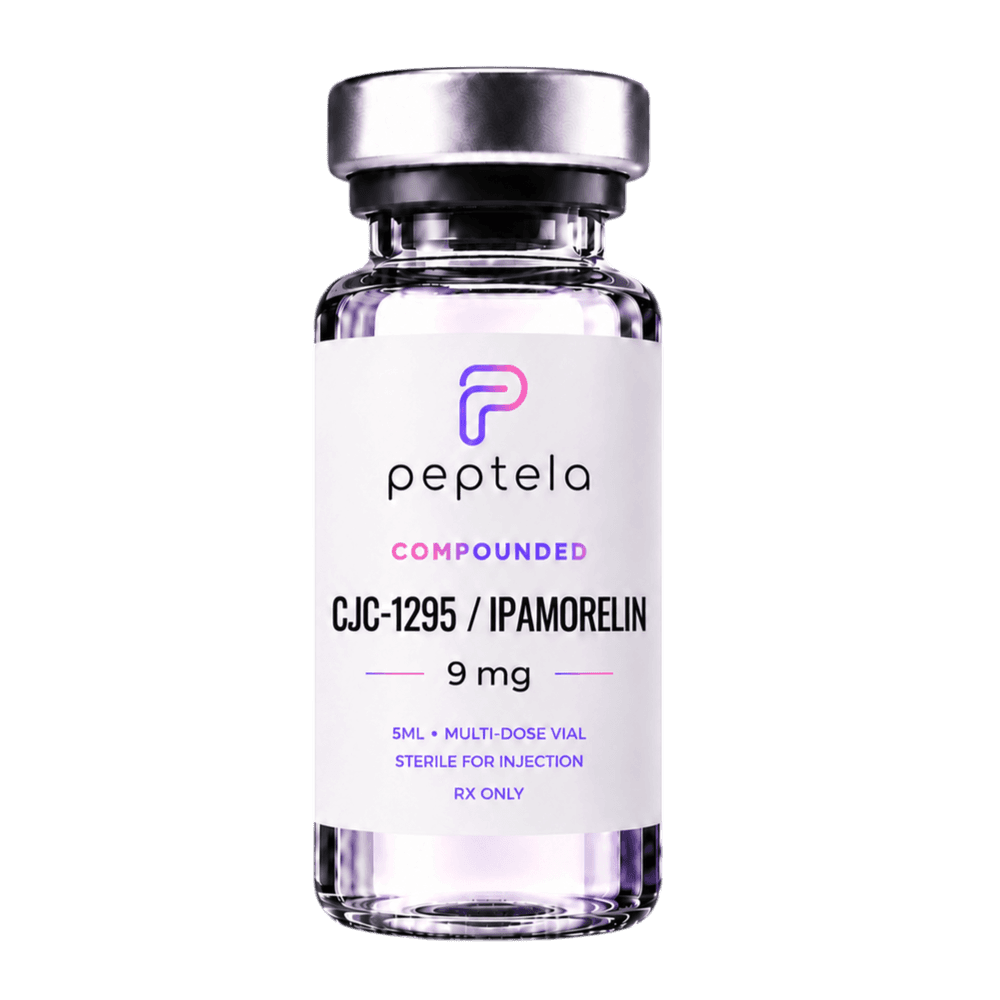
CJC-1295 / Ipamorelin · 9 mg injection
Investigational · Not FDA approved
CJC-1295/Ipamorelin Injections
Rx
CJC-1295 and ipamorelin are synthetic growth-hormone secretagogues. Neither is FDA approved. Human evidence mainly concerns CJC-1295 with DAC and hormone levels, not recovery, body-composition or performance outcomes.
Starting at
$89
/ mo
What the evidence actually shows
CJC-1295 and ipamorelin are synthetic peptides used to stimulate growth-hormone pathways. Neither is FDA approved. Human trials of CJC-1295 with DAC showed hormone-level changes, but no controlled trial has shown that the marketed combination improves healing, recovery, body composition or athletic performance.
HUMAN EVIDENCE
Human trials exist for CJC-1295 with DAC; the exact marketed combination has not been tested in a controlled human trial.
CONTROLLED EFFICACY
Randomized trials measured growth hormone and IGF-1, not recovery, healing, body composition or performance outcomes.
LONG-TERM SAFETY
Long-term safety of the combination is unknown. FDA has described immunogenicity, impurity, tachycardia and vasodilatory-reaction concerns.
Regulatory status
Neither CJC-1295 nor ipamorelin is FDA approved. FDA's current compounding safety-risk materials list both substances and describe safety and product-quality concerns. Both are prohibited under the 2026 WADA Prohibited List. Final 503A and legal wording remains under medical and legal review.
HUMAN AND PRECLINICAL EVIDENCE
What the research shows
The evidence is not all equal. Human observations and animal findings are separated below so they cannot be mistaken for the same level of support.
Human evidence · CJC-1295 with DAC
In randomized, placebo-controlled healthy-adult trials, CJC-1295 with DAC increased growth hormone about 2 to 10 fold and IGF-1 about 1.5 to 3 fold. The studies measured hormone concentrations and short-term tolerability, not healing, recovery or performance outcomes.
Human evidence · Ipamorelin
A randomized trial tested intravenous ipamorelin for postoperative ileus, a different route and indication from this product. It did not significantly shorten the primary recovery endpoint, so it does not establish benefit for the marketed combination.
Clinical development · Terminated Phase 2 study
ClinicalTrials.gov lists NCT00267527, a Phase 2 CJC-1295 study in HIV-associated lipodystrophy, as terminated with enrollment of 120. The displayed registry record does not state the termination reason. This does not provide evidence for the current combination or its marketed uses.
WHAT THIS MEANS
What this means: CJC-1295 with DAC can change growth hormone and IGF-1 levels, but the exact Peptela formulation and the CJC-1295/ipamorelin combination still lack controlled human evidence for the outcomes customers are seeking.
What is CJC-1295/Ipamorelin Injections?
CJC-1295 and ipamorelin are synthetic growth-hormone secretagogues. Neither is FDA approved. Human evidence mainly concerns CJC-1295 with DAC and hormone levels, not recovery, body-composition or performance outcomes.
CJC-1295 is a synthetic analogue of growth hormone-releasing hormone, while ipamorelin is a ghrelin-receptor agonist. CJC-1295 with DAC and the shorter-acting form commonly called CJC-1295 without DAC are distinct substances. Most human CJC-1295 evidence concerns the DAC form; Peptela must confirm which form is in this product before final publication.
PRECLINICAL EVIDENCE
The compounds act through different receptors and are combined on the theory that their effects on growth-hormone release may be complementary. CJC-1295 with DAC has raised growth hormone and IGF-1 in healthy-adult trials. That biomarker effect has not established a patient benefit, and the marketed combination has not been tested in a controlled human trial.
A plausible mechanism is not evidence of clinical benefit.
Safety limits and suitability
The available human evidence is too limited to establish a standard treatment pathway. These points are presented for medical review and informed discussion.
What is not known
The exact CJC-1295 form in this 9 mg product remains to be confirmed. No controlled human study has shown that this combination improves recovery, healing, strength, sleep, body composition or athletic performance. No validated dosing or monitoring protocol exists, and long-term cardiovascular, metabolic and malignancy risks remain uncertain.
Who should not use it
Published evidence has not established formal contraindications for the combination. Draft clinical cautions include active or previous cancer, diabetes or impaired glucose tolerance, known or unassessed cardiovascular disease, suspected pituitary disease, pregnancy or breastfeeding, trying to conceive, and participation in drug-tested sport. Final wording requires medical approval.
When telehealth is not the right setting
In-person or specialist assessment may be more appropriate for symptoms suggesting hormone deficiency, acromegalic features, chest pain, exertional breathlessness, palpitations, uncontrolled or unassessed diabetes, or unexplained fatigue that has not received a standard medical work-up. The final list must match Peptela's actual intake and escalation protocol.
Monitoring and expectations
No validated monitoring protocol exists for this unapproved combination. A clinician-led draft includes baseline and follow-up IGF-1, fasting glucose or HbA1c, blood pressure, heart rate, and symptom review for fluid retention, joint pain and carpal-tunnel symptoms. Exact timing, thresholds, stop criteria and escalation rules remain pending Peptela medical approval.
MEDICAL REVIEW
Dr. Reza Omid
MD
Medical content draft supplied · Final review and sign-off pending
Review date
Selected medical and regulatory references
Primary and regulatory sources used for the current draft. The final reference list remains under medical review.
Frequently asked questions
Start with a clinical evaluation
Diagnosis and suitability come before a product decision. Completing the intake does not guarantee that a clinician will prescribe treatment.